
Refractive Surgery
ICL (Implantable Collamer Lens) Surgery in Singapore
Implantable Collamer Lens (ICL) surgery is a refractive procedure that places a lens inside the eye to correct refractive error without removing corneal tissue.
It may be considered for people with myopia, corneas that are unsuitable for laser vision correction, or other clinical factors that make a corneal procedure less appropriate.
At Advanced Eye Clinic & Surgery (AECS), suitability is determined after an eye examination and measurements of the cornea, anterior chamber, eye pressure, endothelial cells and retina. The surgeon will also discuss other refractive options where relevant.
- Procedure
- Around 40 minutes for both eyes
- Corneal tissue removed
- None
- Lens
- Placed behind the iris and in front of the natural lens
- Anaesthesia
- Numbing eye drops, with additional anaesthesia if clinically required
- Removal
- The lens can be surgically removed or exchanged if needed
- Follow-up
- Early reviews after surgery, followed by longer-term eye monitoring
On this page
What Is an ICL?
An ICL is a soft, foldable phakic intraocular lens. "Phakic" means the eye's natural crystalline lens remains in place. The ICL is positioned behind the coloured iris and in front of the natural lens, where it changes how light is focused onto the retina.
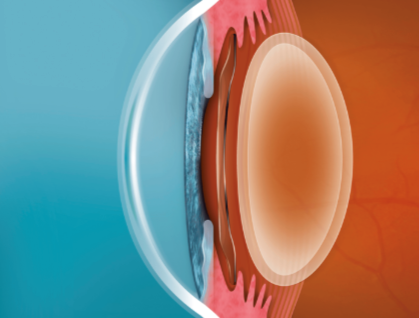
Unlike LASIK, SMILE and surface ablation, ICL surgery does not reshape the cornea. The lens is made from Collamer, a collagen-containing lens material used in ICL products. Some ICL models also have ultraviolet-absorbing properties. This does not replace normal eye protection from sunlight.
ICL products are available in defined lens powers and sizes. At AECS, the available options include EVO, EVO+, toric and hyperopic phakic lenses, with EVO+ used most often because it is the newer model and has a larger optical zone. The surgeon selects the lens model, power and size based on the patient's prescription, internal eye measurements, product indications and surgical planning.
Who May Be Suitable for ICL Surgery?
ICL may be considered for people who want surgical correction of refractive error, including those who are not ideal candidates for corneal laser surgery or who prefer an option that does not remove corneal tissue. Suitability is individual, and prescription alone does not determine whether ICL is the right procedure.
Myopia
Laser vision correction changes the shape of the cornea by removing corneal tissue. As the amount of correction increases, the surgeon must consider how much tissue would need to be removed and how much cornea would remain.
Because ICL adds a lens inside the eye instead of removing corneal tissue, it may be considered for higher levels of myopia where laser treatment is unsuitable or less appropriate. ICL can also be considered for lower myopia in selected patients who prefer not to remove corneal tissue. Some patients choose ICL because they want to continue wearing cosmetic contact lenses or because preserving the cornea may be relevant when planning future cataract surgery, including the option of multifocal intraocular lenses.
Thin or otherwise unsuitable corneas
Corneal thickness, shape and biomechanical characteristics are part of every refractive surgery assessment.
If the cornea is too thin or has other features that make LASIK, SMILE or surface ablation unsuitable, ICL may still be considered because it does not require corneal tissue removal. It therefore avoids the corneal ectasia risk associated with corneal laser reshaping, which can be an important consideration in thinner corneas or when corneal scans are abnormal.
Dry eye or ocular surface concerns
ICL does not treat dry eye. However, because the procedure does not reshape the cornea, it may be considered when pre-existing dry eye or other ocular surface concerns affect the suitability of a corneal laser procedure. Dry eye should still be assessed and managed before and after surgery.
Hyperopia and astigmatism
AECS uses phakic lens options for hyperopia where clinically appropriate, and toric ICL models for myopic astigmatism. The available ICL power range extends to approximately -18.0 D of myopia and -6.0 D of cylinder, subject to the specific lens model, regulatory indication and the patient's eye measurements.
Who may not be suitable
The main anatomical limiting factor is anterior chamber depth: there must be sufficient space inside the eye to insert the lens. ICL may also be unsuitable when other findings increase the risks of an intraocular lens procedure. Factors the surgeon will assess include:
- Anterior chamber depth and angle
- Corneal endothelial cell density
- Eye pressure and the presence of glaucoma or ocular hypertension
- Existing cataract or changes in the natural lens
- Active inflammation or other significant eye disease
- Retinal health, particularly in people with high myopia
- Prescription stability
- Pregnancy or breastfeeding
- General medical conditions and medicines that may affect surgery or healing
Age is considered alongside other refractive-surgery factors, but stable refraction is one of the most important eligibility criteria. The available treatment range is limited by the lens powers available; at AECS this extends to approximately -18.0 D of myopia and -6.0 D of cylinder for astigmatism, subject to the lens model and the patient's anatomy. The final decision should be based on the applicable product indication, the surgeon's clinical assessment and the patient's visual needs.
Can an ICL Be Removed or Exchanged?
ICL is often described as a reversible form of refractive surgery because the implanted lens can be surgically removed or exchanged if clinically necessary. This differs from laser procedures, where corneal tissue is permanently reshaped.
Removal or exchange is another intraocular procedure. It does not return the eye to an exact pre-surgery state.
An ICL may be removed because of a change in eye health, lens position, sizing, prescription or later cataract surgery. If cataract surgery is required in the future, the ICL can be removed as part of the surgical planning.
The ICL Procedure, Step by Step
-
Before surgery: the ICL assessment
The assessment examines both the surface and the inside of the eye. It typically includes the patient's refractive error, corneal shape and thickness, anterior chamber measurements, endothelial cell count, eye pressure and a retinal examination.
These findings help determine whether an ICL is suitable and which lens power and size should be considered. At AECS, anterior chamber depth is cross-checked using the Pentacam, Orbscan and Anterion to assess the available internal space before lens selection.
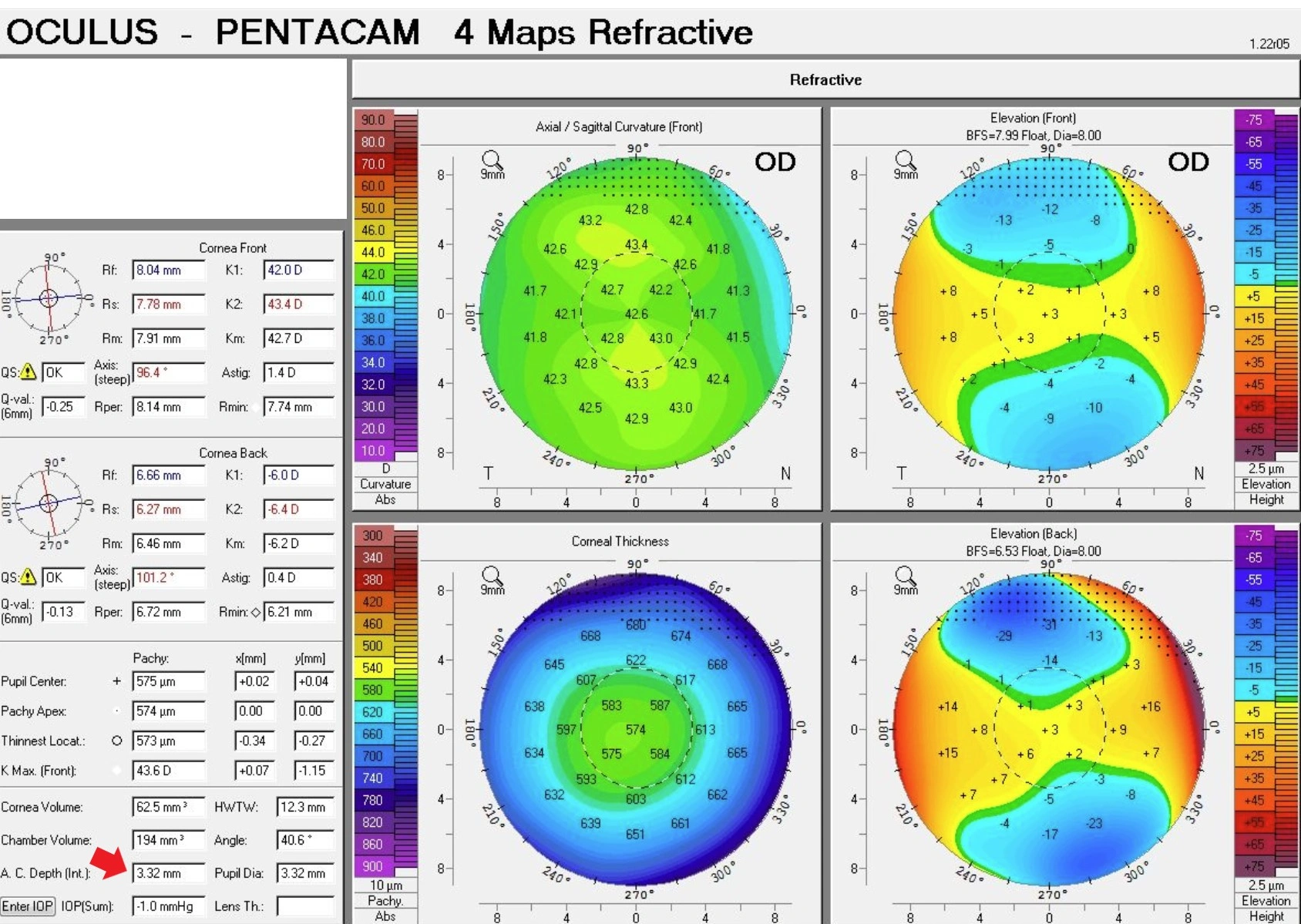
Pentacam ACD measurement image. 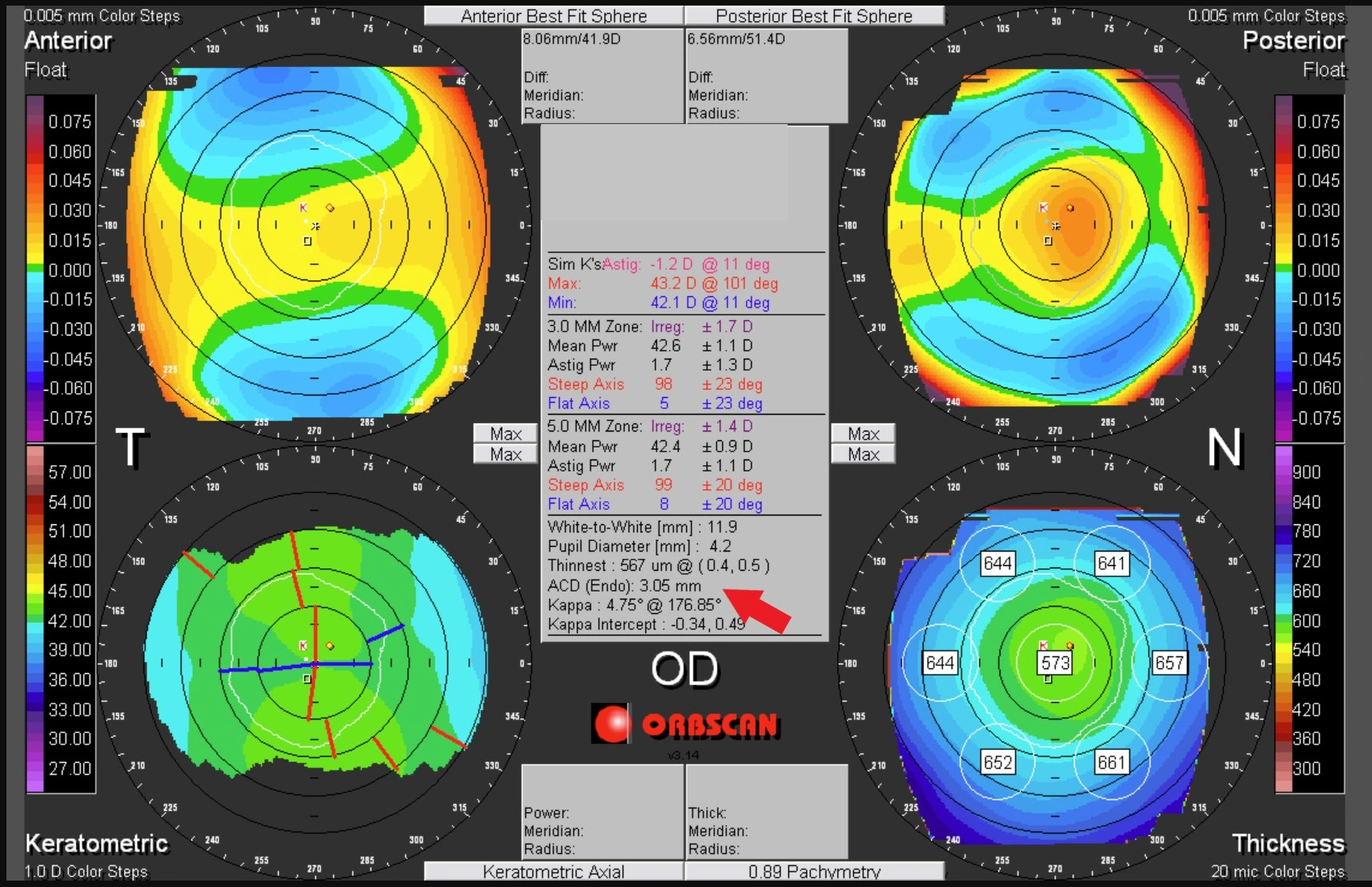
Orbscan ACD measurement image. 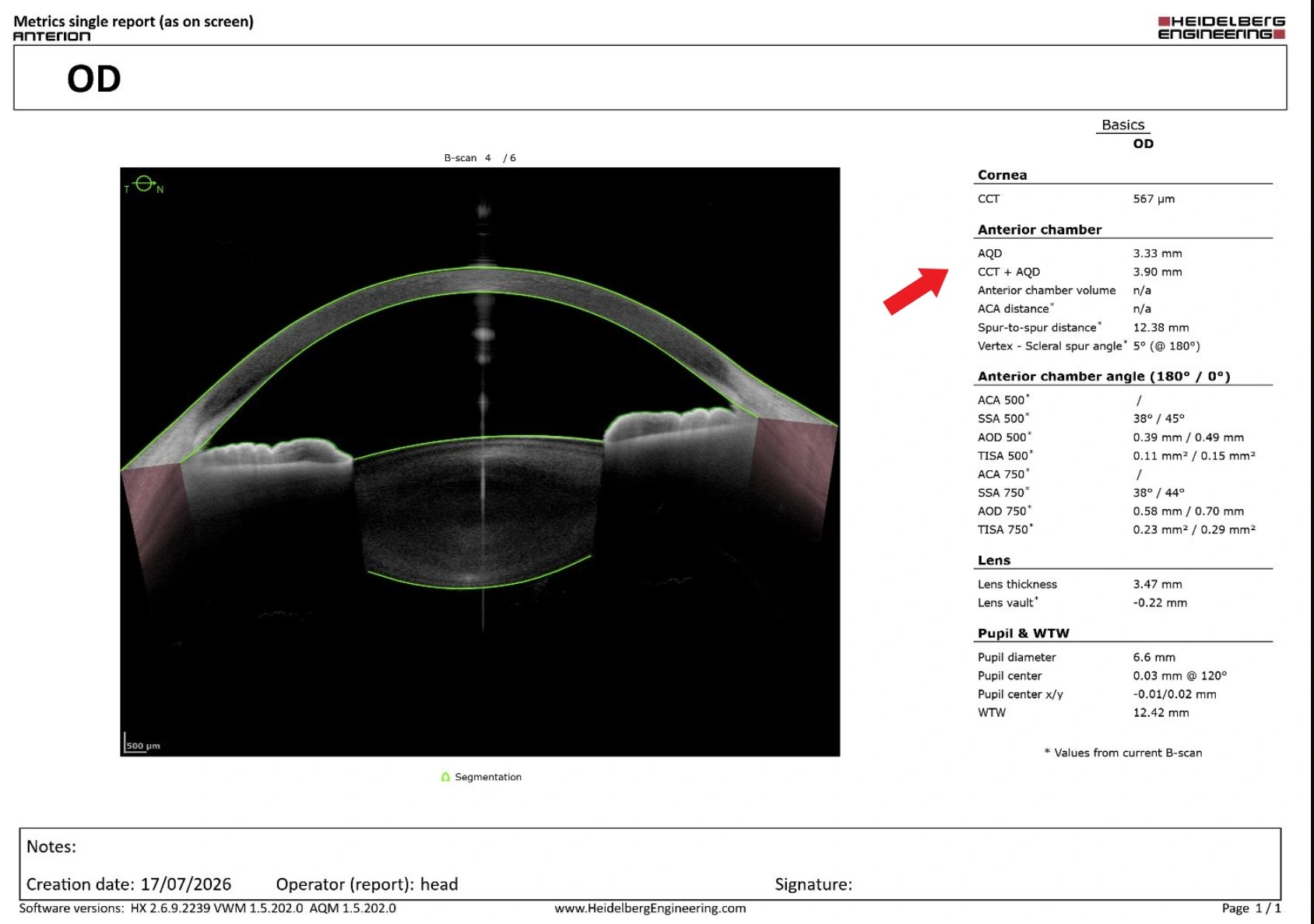
Anterion ACD measurement image. Lens sizing is clinically important because the space between the ICL and the natural lens, known as the vault, can affect postoperative risk.
Measurements can include white-to-white corneal diameter, anterior chamber depth and additional anterior segment imaging or ultrasound-based measurements, depending on the surgeon and case. Lens exchange is rarely required, but it may be considered if the implanted lens makes the anterior chamber too shallow or if a lens is too small and rotates easily.
Contact lenses can temporarily alter corneal measurements. At AECS, patients are asked to stop soft contact lenses for one week and hard contact lenses for three weeks before the assessment so the measurements reflect the eye without contact-lens effects.
Pupils may be dilated during the assessment, which can blur near vision and increase light sensitivity for several hours. Patients should bring sunglasses and avoid driving until their vision is comfortable and safe.
-
During surgery
ICL surgery is usually performed as a day procedure, with both eyes normally treated in the same session. Numbing eye drops are used before surgery, with additional anaesthesia if clinically required.
Through a small corneal incision, the folded lens is inserted into the eye and positioned behind the iris and in front of the natural lens. The surgeon then checks the lens position and completes the procedure. The incision is designed to heal without routine stitches.
The surgery itself usually takes around 40 minutes for both eyes. Patients should allow about 3 to 4 hours at the day surgery centre for preparation, dilation, surgery, postoperative checks and discharge. Your surgeon will explain the planned timing and anaesthesia before surgery.
-
Immediately after surgery
Vision may be misty or blurred and the eyes may be light-sensitive during the first several hours.
Eye pressure, the position of the ICL and the corneal wound are checked as advised by the surgeon. Patients go home with prescribed eye drops and postoperative instructions, and should arrange transport rather than drive themselves.
ICL Recovery and Follow-up
Recovery varies between individuals, so the surgeon's instructions take priority over general timelines.
First 24 hours
Blurred or fluctuating vision, light sensitivity, mild grittiness and halos around lights can occur early after surgery. Use the prescribed drops exactly as directed. The first review commonly checks eye pressure, the ICL position, the corneal wound and the early healing response.
First week
Many patients can return to routine desk-based activities within several days, provided their vision is adequate and the surgeon is satisfied with recovery.
Avoid rubbing the eyes, keep water and eye makeup out of the eyes, and use any protective eye shield as instructed. Driving should resume only when the patient meets the legal visual standard and has been cleared to do so.
First month and longer-term care
Exercise, swimming, saunas, hot yoga and contact sports can usually resume after about one month, subject to the surgeon's advice and individual recovery. Vision can continue to change during the early healing period. Follow-up schedules vary, but commonly include reviews in the first day, first week and first month, with additional reviews as required.
Long-term eye reviews remain important after ICL implantation. Depending on the patient, these may include monitoring of eye pressure, lens vault and position, the natural lens for cataract changes, corneal endothelial cells and retinal health.
ICL Risks and Complications
ICL is an intraocular surgical procedure, so potential complications should be discussed before treatment. The likelihood and significance of each risk depend on the patient's anatomy, age, prescription, lens sizing and other eye conditions.
Possible side effects and complications include:
- Glare, halos or other visual symptoms, particularly in low-light conditions
- Temporary fluctuations in vision during healing
- Raised eye pressure after surgery
- Inflammation
- Cataract formation or progression
- Ongoing corneal endothelial cell loss
- Lens rotation in toric ICLs or an ICL position that requires further management
- Residual refractive error
- Infection or other uncommon sight-threatening complications
Lens sizing and postoperative vault are important because an ICL that sits too close to the natural lens or produces excessive crowding in the anterior segment can contribute to complications. At AECS, anterior chamber depth is cross-checked with the Pentacam, Orbscan and Anterion before surgery. Lens exchange is uncommon, but it may be considered if the ICL makes the anterior chamber too shallow or if the lens is too small and rotates easily. This is why preoperative measurements and postoperative monitoring are part of the treatment process.
Contact the clinic promptly after surgery if there is increasing pain, worsening redness, a sudden drop in vision, significant swelling, discharge or another unexpected change. Patients should not wait for the next scheduled review if symptoms are worsening.
ICL Cost in Singapore
ICL fees vary according to the lens model, whether a toric lens is required, the type of anaesthesia, the surgical facility, operating protocols, the surgeon's experience, the preoperative assessment and what postoperative care is included. In bilateral surgery, whether separate sterile instrument sets are used for each eye can also affect facility and consumable costs. AECS provides an itemised quotation based on the lens and treatment plan.
When comparing fees between clinics, patients should check what is included in the quoted amount, such as the suitability assessment, surgeon's fee, lens, facility charges, medication, standard follow-up reviews and the policy for any additional procedure that may be required.
Why ICL Generally Costs More Than Corneal Laser Procedures
ICL surgery includes the cost of an implantable medical device for each eye and is performed as an intraocular surgical procedure. Fees therefore reflect the lens itself, operating facility, surgical care, measurements and postoperative monitoring. The final price depends on the patient's lens and treatment plan.
Is ICL Claimable Under MediSave or Insurance?
ICL performed for refractive correction is generally treated as an elective procedure and is usually not claimable under MediSave.
Standard health insurance plans also commonly exclude elective refractive surgery, although coverage can differ between policies and employer benefits. Patients should confirm current eligibility with the clinic, insurer or employer before treatment.
ICL vs LASIK and SMILE
ICL, LASIK and SMILE correct refractive error in different ways. The appropriate procedure depends on the prescription, corneal measurements, ocular surface, internal eye anatomy, age and visual requirements. The table below is a general comparison rather than a ranking of the procedures.
| Comparison | ICL | LASIK | SMILE |
|---|---|---|---|
| How it works | A lens is implanted behind the iris | A corneal flap is created and the cornea is reshaped with an excimer laser | A lenticule is created and removed through a small corneal incision |
| Corneal tissue removed | No | Yes | Yes |
| Common clinical considerations | Considered across low to high myopia, especially when corneal tissue preservation is preferred or the cornea is unsuitable for laser | Considered across a broad refractive range when corneal measurements are suitable | Used mainly for myopia and myopic astigmatism within the applicable platform indication |
| Removable | The implanted lens can be surgically removed or exchanged if required | No | No |
| Key risks to discuss | Intraocular pressure, cataract, endothelial cells, lens sizing or position, infection | Dry eye, flap-related issues, corneal healing, residual refractive error | Dry eye, corneal healing, lenticule-related complications, residual refractive error |
In practice, ICL is commonly discussed when the cornea is too thin for laser treatment or when corneal scans show abnormalities that make LASIK, SMILE or surface ablation less appropriate. It may also be considered in lower myopia when preserving corneal tissue is a patient priority.
ICL Assessment and Surgery at Advanced Eye Clinic & Surgery
AECS offers ICL alongside other refractive procedures, including LASIK, SMILE and surface ablation. This allows the surgeon to discuss more than one treatment route when the eye measurements support different options.
ICL surgery at AECS is performed by Dr Chua Wei Han and Dr Mohamad Rosman, whose clinical work includes refractive surgery and phakic intraocular lens procedures.
For patients with high myopia, retinal health is also relevant because high myopia is associated with a higher lifetime risk of retinal problems. AECS has vitreoretinal specialists who can assess or manage retinal findings when clinically indicated.
Our ICL Surgeons

Dr Chua Wei Han
Founder, Medical Director and Senior Consultant Ophthalmologist
BMedSc (Hons), BMed (Hons), MMed(Ophth), FRCSEd (Ophth), FAMS
Dr Chua is Founder, Medical Director and Senior Consultant Ophthalmologist at AECS. His clinical work includes cataract and refractive surgery, including phakic intraocular lens procedures.

Dr Mohamad Rosman
Senior Consultant Ophthalmologist
MBBS, MMed (Ophth), MRCSEd, FRCS (Edinburgh), FAMS
Dr Rosman is a Senior Consultant Ophthalmologist. He previously headed the Refractive Surgery Department at the Singapore National Eye Centre from 2014 to 2023. His former roles included refractive-surgery training and service leadership. He is a speaker and trainer for STAAR Surgical, the manufacturer of ICL lenses. He is routinely invited to speak about ICL and teaches junior doctors ICL surgical techniques.
Retinal Assessment for High Myopia
AECS also has vitreoretinal specialists Dr Lee Shu Yen and Dr Kelvin Teo. Where a refractive-surgery patient has retinal findings that require subspecialty assessment or treatment, the clinic can coordinate this within the same practice. A retinal specialist review is arranged when clinically indicated.
Frequently Asked Questions
Can ICL correct high myopia?
Yes. ICL can correct high myopia, and it can also be considered for lower myopia in selected patients who prefer to preserve corneal tissue. At AECS, the available ICL power range extends to approximately -18.0 D of myopia, subject to the lens model and the patient's anterior chamber anatomy, endothelial cell count, retinal health and other measurements.
Can ICL help if I have dry eyes?
ICL does not treat dry eye. It does not require corneal tissue removal, so it may be considered when dry eye or ocular surface findings affect the suitability of corneal laser surgery. Existing dry eye should still be assessed and treated where needed.
Can I feel or see the implanted lens?
The ICL sits behind the iris, so it is not normally visible to the patient or to other people. Patients generally do not feel the lens once the eye has recovered. Persistent discomfort should be assessed rather than assumed to be normal.
How long does an ICL last?
ICLs are designed for long-term implantation. They do not have a routine replacement schedule, but they may need to be removed or exchanged if the prescription, eye anatomy or eye health changes, or when cataract surgery is required.
Can an ICL be removed?
Yes. The lens can be surgically removed or exchanged if clinically indicated. Removal is another intraocular procedure, so the benefits and risks should be discussed with the surgeon.
Can ICL treat astigmatism?
Toric ICL models can correct myopic astigmatism up to approximately -6.0 D of cylinder at AECS, subject to lens availability, product indication and the patient's eye measurements.
Can ICL treat long-sightedness?
AECS offers hyperopic phakic lens options where clinically appropriate. Availability and treatment ranges depend on the lens model, regulatory indication and the patient's internal eye anatomy.
Will I still develop cataracts later in life?
Yes. ICL does not prevent the natural lens from ageing. Cataract formation is also a recognised potential complication after phakic intraocular lens implantation. If cataract surgery becomes necessary, the ICL can be removed as part of the treatment plan.
What if my prescription changes after ICL surgery?
Small refractive changes may be managed with spectacles for specific tasks. In selected situations the ICL can be exchanged, or another refractive option may be considered. The choice depends on the amount of change and the health of the eye.
When can I drive, exercise or swim?
Driving depends on visual recovery and the legal driving standard, and should resume only when the surgeon is satisfied with recovery. Exercise, swimming and contact sports can usually resume after about one month, subject to the surgeon's postoperative instructions and individual healing.
How much does ICL surgery cost in Singapore?
Fees depend on the lens model, whether a toric lens is needed, the surgical facility and what assessments and follow-up care are included. AECS can provide a current itemised quotation after the suitability assessment.
Is ICL claimable under MediSave?
ICL performed for elective refractive correction is generally not MediSave-claimable. Patients should confirm current rules and any insurance or employer benefits before treatment.
References
- STAAR Surgical. EVO|EVO+ Visian ICL Directions for Use. Product indications, contraindications, warnings, sizing guidance and postoperative monitoring.
- Chung B, Choi JY, et al. Ten-Year Clinical Outcomes of V4c Implantable Collamer Lens Implantation: Longitudinal Analysis of Visual Acuity, Endothelial Cell Density, and Vault Dynamics. American Journal of Ophthalmology. 2025;269:1-10. doi:10.1016/j.ajo.2024.08.007.
- Goes S, Delbeke H, et al. Posterior chamber toric implantable collamer lenses vs LASIK for myopia and astigmatism: systematic review. Journal of Cataract & Refractive Surgery. 2022;48:1204-1210. doi:10.1097/j.jcrs.0000000000001007.
- Igarashi A, Kamiya K, Shimizu K, Komatsu M. Visual Performance after Implantable Collamer Lens Implantation and Wavefront-Guided LASIK for High Myopia. American Journal of Ophthalmology. 2009;148:164-170.
Speak to a refractive surgeon
Suitability for ICL depends on your prescription, corneal measurements, anterior chamber anatomy, endothelial cells, eye pressure and retinal health. A detailed assessment determines whether ICL or another refractive option is appropriate.