
Laser vision correction
ReLEx SMILE & SMILE Pro Surgery in Singapore
ReLEx SMILE is a flapless form of laser vision correction that reshapes the cornea through a small incision without creating a LASIK flap.
At Advanced Eye Clinic & Surgery, SMILE is considered suitable for patients seeking correction of refractive errors such as short-sightedness and astigmatism, based on their prescription, corneal measurements, eye health and lifestyle.
- Procedure time
- ~10 minutes for each eye
- Incision
- Small keyhole incision, no corneal flap
- Anaesthesia
- Numbing eye drops
- Back to work
- Often by the 3rd or 4th day, depending on recovery
- Sports
- Resume according to the surgeon's postoperative advice
- Platform at AECS
- ZEISS VISUMAX 800
On this page
What Is ReLEx SMILE?
SMILE stands for Small Incision Lenticule Extraction. A femtosecond laser creates a thin, contact-lens-shaped disc of tissue called a lenticule within the cornea.
The surgeon then removes the lenticule through a small incision at the edge of the treatment zone. Removing this tissue changes the corneal curvature according to the treatment plan, allowing light to focus more accurately on the retina.
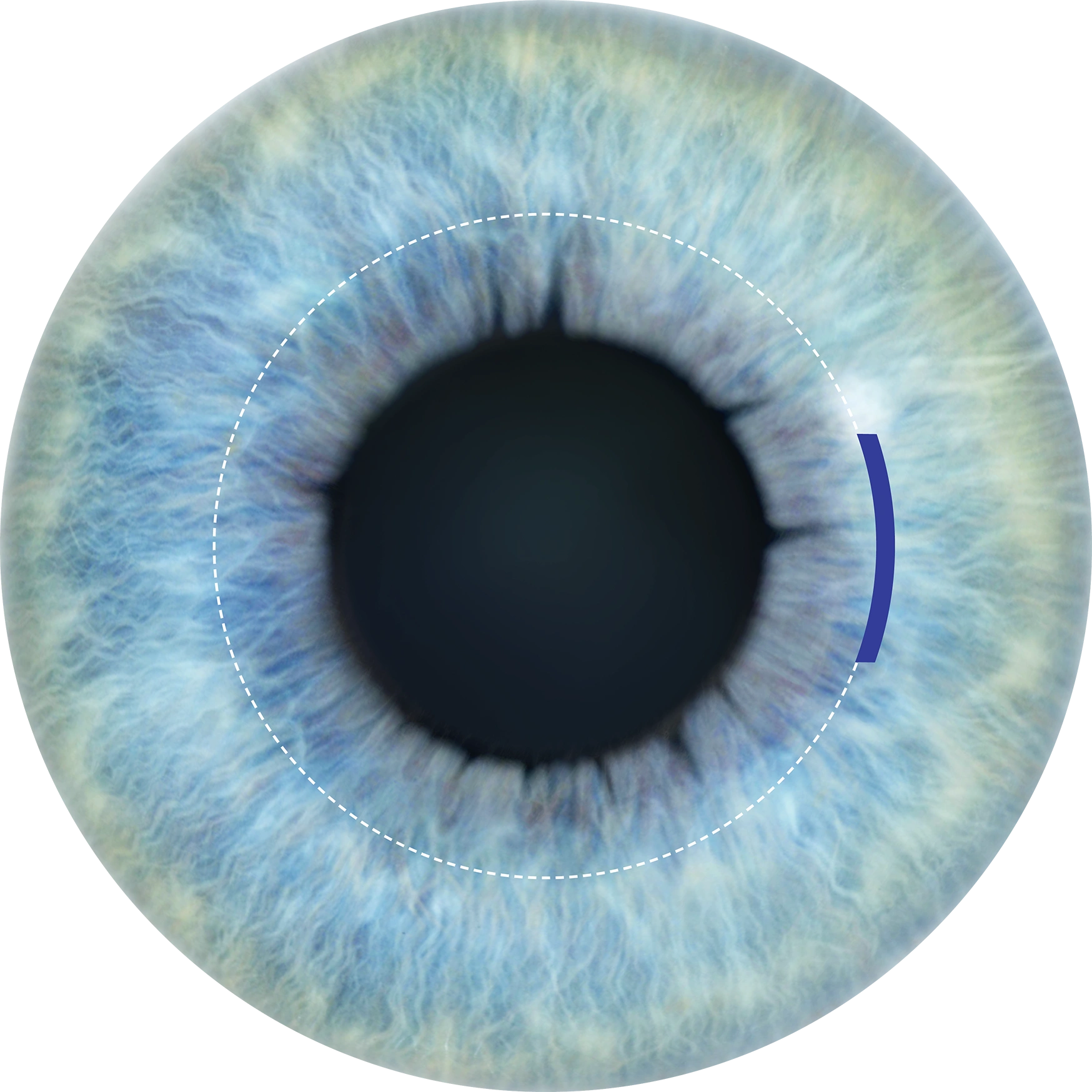
The main structural difference from LASIK is that SMILE does not create a corneal flap. LASIK uses a hinged flap to access the underlying corneal tissue, while SMILE removes the lenticule through a small incision.
SMILE was developed for the ZEISS VisuMax platform and has been used clinically for more than a decade. It is an established refractive surgery technique used in many countries.
SMILE vs SMILE Pro: What's the Difference?
SMILE Pro uses the same small-incision lenticule extraction technique on the newer ZEISS VISUMAX 800 platform. The platform introduces several practical changes to the treatment workflow:
- For specified treatments, the laser step can take around 10 seconds per eye, reducing the time the eye is held under suction.
- OcuLign can support cyclotorsion adjustment for astigmatic treatments by accounting for eye rotation between the upright and treatment positions.
- CentraLign can assist the surgeon with treatment centration during docking.
SMILE and SMILE Pro describe the same underlying surgical principle, but the laser platform, software features and available treatment indications may differ.
At Advanced Eye Clinic & Surgery, SMILE Pro is performed on the ZEISS VISUMAX 800 platform.
Benefits of ReLEx SMILE
SMILE has several characteristics that may be relevant when comparing refractive surgery options.
No corneal flap
Because SMILE does not create a corneal flap, flap displacement is not a SMILE-specific complication. This can be relevant for people involved in contact sports or occupations where direct eye trauma is possible.
Dry eye after SMILE
Temporary dry eye can still occur after SMILE. Its small-incision approach preserves more of the anterior corneal nerve structure than a LASIK flap, and comparative studies have reported less postoperative dry-eye impact in some patients.
Pre-existing dry eye should still be assessed and treated before surgery where needed.
Recovery after SMILE
Many patients can return to desk work within a few days, although visual sharpness may continue to settle over the following weeks. Return to exercise, swimming and contact sports should follow the surgeon's postoperative advice.
Am I Suitable for SMILE?
SMILE may be considered if you:
- Are at least 18 years old with a prescription stable for at least 12 months
- Have adequate corneal thickness
- Have healthy eyes free of active disease
- Are not pregnant or breastfeeding
At AECS, the ZEISS VISUMAX 800 can treat myopia up to -10.00D and astigmatism up to -5.00D, subject to corneal safety limits and the surgeon's assessment. At the lower end of the range, very low prescriptions may not be suitable because the lenticule can become too thin. Suitability is determined by the prescription, corneal measurements and the surgeon's assessment.
The following situations commonly affect whether SMILE is suitable. The final recommendation depends on your examination and corneal scans rather than on any single factor.
Dry eye
Dry eye does not automatically rule out SMILE. Before refractive surgery, AECS may ask patients to stop contact lens use and use lubricating eye drops; specific causes of dry eye should be treated first. Mild or moderate dryness can then be reassessed before surgery.
If the ocular surface remains significantly compromised, corneal laser surgery may be postponed until it is better controlled. Depending on the eye and the patient's priorities, surface ablation or a non-corneal option such as ICL may also be discussed.
Thin or borderline corneas
Corneal thickness and shape are assessed together with the amount of tissue required for treatment.
If the calculated residual corneal thickness after SMILE would fall below safety limits, the surgeon may discuss surface ablation or ICL instead. Surface ablation has its own corneal safety limits; if the cornea is not suitable for either corneal procedure, ICL may be the remaining surgical option. AECS may also consider LASIK Xtra (LASIK with corneal cross-linking) for selected patients with borderline corneal thickness, provided the cornea remains above the relevant safety limits.
Unstable prescriptions
AECS generally advises monitoring when the prescription has increased by more than 0.5D over 12 months. Refractive surgery is usually deferred until the prescription is stable. In selected cases, surgery may still be considered after counselling, but the patient should understand that ongoing refractive change increases the risk of regression and may mean enhancement is needed later.
Pregnancy and breastfeeding
Pregnancy and breastfeeding can temporarily affect refraction and the ocular surface. Refractive surgery is generally deferred until after pregnancy and breastfeeding, and until the prescription and tear film have stabilised.
Keratoconus
Keratoconus is a condition in which the cornea becomes progressively thinner and more irregular.
Keratoconus, or corneal scans that raise concern for ectasia, generally makes elective corneal laser vision correction unsuitable. If it is detected, the corneal condition is assessed and managed first. Corneal laser refractive surgery is contraindicated in such cases. ICL may be considered only if the corneal condition is stable and the eye is otherwise suitable.
Suitability at a glance
| Situation | SMILE may be considered? | Other options if not suitable |
|---|---|---|
| Myopia with astigmatism | Potentially, up to -10.00D myopia and -5.00D astigmatism, subject to corneal safety limits | LASIK / surface ablation / ICL, depending on findings |
| Contact or active sports | May be considered because no corneal flap is created | Surface ablation / ICL may also be discussed |
| Mild-moderate dry eye | Depends on severity and ocular-surface control | Treat dry eye first; another procedure may be considered |
| Severe dry eye | Often requires treatment and reassessment first | ICL, surface ablation or no surgery may be considered |
| Thin cornea | Depends on thickness, shape and treatment parameters | Surface ablation / ICL |
| Very high myopia | May fall outside a suitable corneal laser range | ICL may be considered |
| Very low myopia | May be unsuitable if the lenticule would be too thin | LASIK / surface ablation / no surgery |
| Hyperopia (long-sightedness) | Depends on the current platform and available treatment indication | LASIK / lens-based options, depending on findings |
| Astigmatism without myopia | Depends on the current AECS treatment indication | LASIK / surface ablation may be considered |
| Unstable prescription | Not until the prescription is stable | Wait and reassess |
| Pregnancy / breastfeeding | Usually deferred | Reassess after refraction and ocular surface stabilise |
| Keratoconus | No; elective corneal laser surgery is generally avoided | Corneal specialist management; other vision correction may be discussed later. ICL can be an option, but only if the cornea is stable. |
When SMILE isn't the right fit
- Prescription outside AECS's current SMILE treatment indications. LASIK, surface ablation or ICL may be considered instead, depending on the refractive error and eye measurements.
- Corneal measurements that do not support SMILE. Corneal thickness, topography and the planned amount of tissue removal all affect whether a corneal laser procedure is appropriate.
- Presbyopia. SMILE does not stop the age-related loss of near focusing ability. Patients in their 40s and beyond may still need reading glasses or may need to discuss other approaches to near vision.
- Very high myopia. If the prescription falls outside a suitable corneal laser range, ICL or another option may be discussed.
- Active eye disease, unstable prescription, pregnancy or breastfeeding. Treatment may need to be postponed or another option considered.
If SMILE is not suitable, the assessment helps identify whether LASIK, surface ablation, ICL or continued use of glasses or contact lenses is more appropriate.
Is ReLEx SMILE the Right Option for Me?
There is no single refractive procedure that is best for everyone. SMILE may be considered when the prescription falls within the available treatment range, the corneal measurements are suitable and a flapless corneal procedure fits the patient's clinical needs and lifestyle.
Other patients may be better suited to LASIK, surface ablation, ICL or no surgery.
- Your prescription and astigmatism pattern
- Corneal thickness, shape and topography
- Ocular surface health, including the severity of dry eye
- Occupation, sports and the likelihood of direct eye trauma
- Age, reading-vision needs and whether a lens-based procedure should be considered
- Whether the prescription has remained stable
These factors are considered together with your examination results. At AECS, when corneal measurements are suitable, SMILE may be favoured for patients with signs or a history of dry eye, or for those involved in contact sports. SMILE may be advised against when the refractive error is outside the suitable range, when the cornea is too thin for the planned treatment, or when scans suggest corneal weakness. The recommendation should be based on the procedure your eyes can safely support rather than on a preference formed before the assessment.
Find out whether SMILE suits your eyes
A suitability assessment measures your prescription, corneal shape and thickness, ocular surface and other eye-health factors before any procedure is recommended.
The SMILE Procedure, Step by Step
-
Before surgery: the assessment
A refractive assessment may take around two to three hours depending on the tests required. It typically includes measurement of corneal shape and thickness, prescription, pupil size, tear-film status and eye pressure, together with a dilated retinal examination to check for other eye pathology.
Contact lenses should be stopped before the assessment according to the clinic's instructions so the cornea can be measured in its natural shape. Dilating drops can blur near vision for several hours, so bring sunglasses and avoid driving afterwards.
On the day of surgery, avoid eye makeup and follow the clinic's instructions on cosmetics, fragrances, medication, meals and transport. Fasting requirements and the use of a mild sedative, if any, should be confirmed with the clinic before the procedure.
-
During surgery
Numbing eye drops are used and a suction ring steadies the eye during the laser step. Some patients notice pressure or tightness, and vision may dim briefly.
The laser creates the lenticule within the cornea, after which the surgeon separates and removes it through the small incision. The surgeon guides you through the procedure and checks the eye before you leave the treatment area.
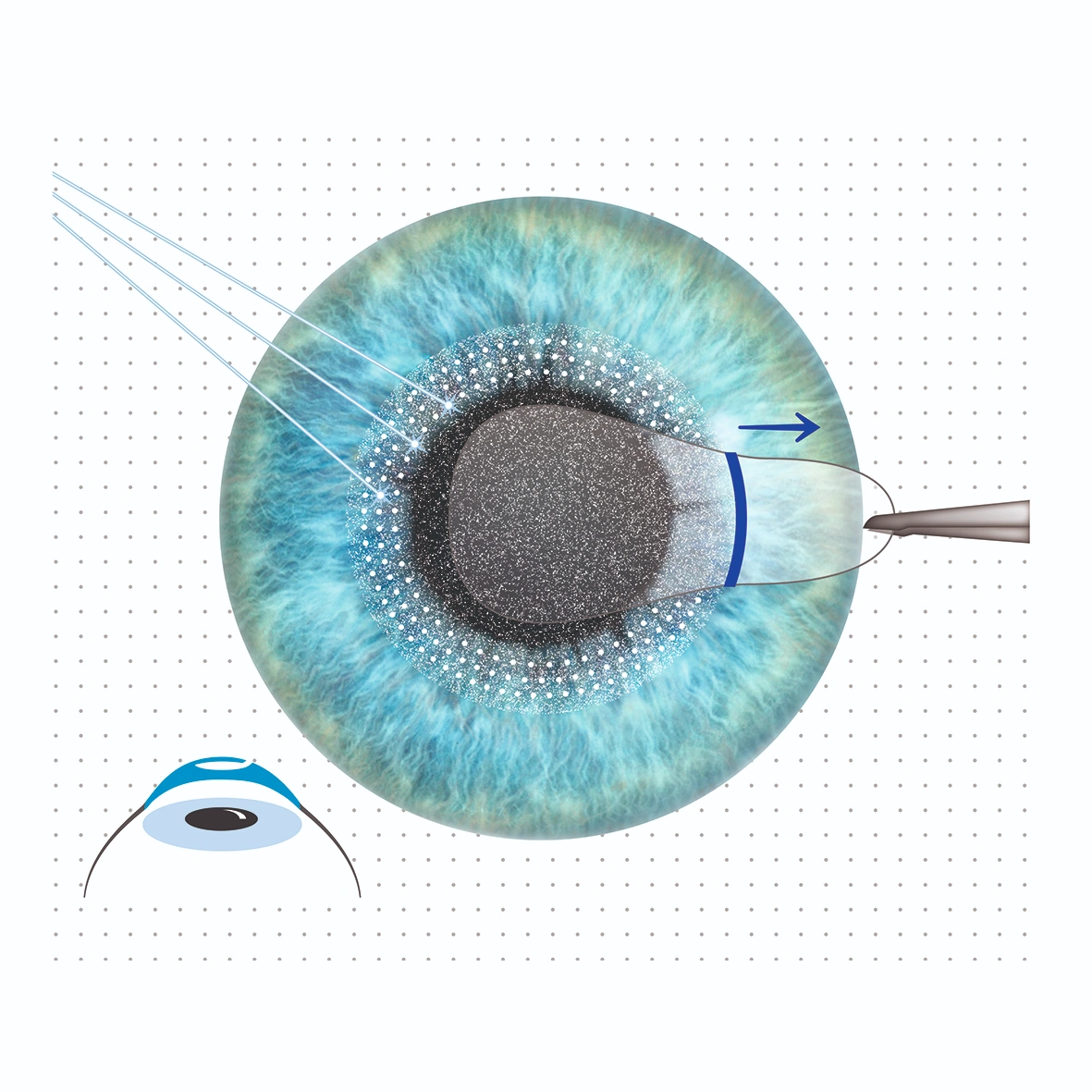
SMILE laser vision correction treatment. -
Right after
Vision is commonly misty or hazy for the first several hours. The eyes may also feel gritty, watery or light-sensitive after the numbing drops wear off. Go home, use the prescribed drops as directed and arrange for someone else to drive. Do not get water into the eyes on the first day.
SMILE Recovery Timeline
First 24 hours
Vision is often clearer by the next day, although sharpness may continue to change. The day-one review checks the incision, cornea and early healing. If vision is adequate, some patients may be able to drive the next day, subject to the surgeon's advice.
First week
Most AECS patients return to desk work around the 3rd or 4th day, depending on visual recovery and the type of work. Medical leave is commonly given for about 4 to 5 days. Light exercise can usually resume after about one week.
First month and beyond
Vision can continue to fine-tune over the following weeks and may take several months to stabilise, particularly after higher corrections.
Avoid rubbing the eyes, follow instructions on eye shields and makeup, and keep water out of the eyes while they are healing.
Swimming and contact sports should be avoided for about one month, and contact lenses for the first three months, unless your surgeon advises otherwise. Cosmetic lenses may also need to be refitted because the corneal shape has changed.
SMILE corrects your current refractive error but does not stop future age-related or refractive changes in the eye. Presbyopia will still occur with age, so reading glasses may be needed later. If the eye remains stable, the correction should remain stable; if the eye continues to change, refractive error can recur. Habitual eye rubbing may also contribute to recurrent astigmatism. Where clinically appropriate, regression may be treated with enhancement surgery.
SMILE Side Effects and Risks
SMILE has recognised side effects and risks, as with other refractive procedures. Temporary symptoms can include dryness, light sensitivity, fluctuating vision, glare or halos, especially during the early recovery period.
Less common complications include inflammation, infection, suction loss, difficulty separating or removing the lenticule, and residual refractive error. Your surgeon will discuss the risks that are relevant to your eyes before treatment.
If an enhancement is ever needed
A minority of patients may have residual short-sightedness, long-sightedness or astigmatism after treatment.
If further correction is clinically appropriate, an enhancement is considered only after the refraction has stabilised. The enhancement method may involve surface ablation or LASIK, depending on the cornea, the original treatment and the surgeon's assessment.
ReLEx SMILE Cost in Singapore
SMILE fees vary according to the clinic, surgeon, platform and what is included in the treatment package. When comparing fees, check whether the suitability assessment, postoperative reviews, medication and any enhancement policy are included.
At AECS, fees are discussed after the assessment confirms which refractive procedure is suitable.
Is SMILE claimable under MediSave or insurance?
SMILE is generally performed as elective refractive surgery. MediSave and insurance eligibility can depend on the specific clinical circumstances and current scheme or policy rules.
SMILE vs LASIK vs ICL
| Procedure | How it works | Commonly considered for | Typical recovery |
|---|---|---|---|
| SMILE | Lenticule removed through a small corneal incision; no flap created | Myopia with or without astigmatism within the available treatment range; selected patients seeking a flapless corneal procedure | Functional vision often returns within a few days; stabilisation can take longer |
| LASIK | Corneal flap created, followed by excimer-laser reshaping | Myopia, hyperopia and astigmatism within the treatment range, subject to corneal suitability | Many patients return to desk work within 1-2 days |
| ICL | Implantable lens placed inside the eye without removing corneal tissue | Higher refractive errors or eyes that may not be suitable for corneal laser treatment | Many patients recover functional vision within a few days; follow-up is required |
SMILE vs LASIK, feature by feature
The table below compares practical differences between SMILE and LASIK. It is a general guide only; treatment indications and suitability depend on the platform, prescription and individual eye measurements.
| Feature | SMILE | LASIK |
|---|---|---|
| Corneal flap | No | Yes |
| Access to treatment area | Small corneal incision | Corneal flap |
| Dry eye | Temporary dry eye can occur; some studies report less postoperative impact than LASIK | Temporary dry eye can occur and is commonly discussed during counselling |
| Contact sports | No flap-specific displacement risk; return according to surgeon's timeline | Flap-related precautions apply after surgery |
| Hyperopia | Depends on platform, software and available treatment indication | May be treated in suitable patients |
| Astigmatism without myopia | Depends on the current AECS treatment indication | May be treated in suitable patients |
| Initial visual recovery | Functional vision often returns quickly; sharpness may continue to settle | Vision often sharpens quickly after surgery |
| Lasers involved | Femtosecond laser | Femtosecond + excimer laser |
| If further correction is needed | Enhancement method depends on the eye and may include surface ablation or LASIK | Enhancement may be considered after stability, depending on the eye and prior treatment |
The appropriate procedure depends on your prescription, corneal measurements, ocular surface, age and visual needs.
The Surgeon's Role in SMILE
SMILE includes a manual surgical step after the laser creates the lenticule.
The surgeon separates the tissue planes and removes the lenticule through the small incision. This makes surgical technique and intraoperative judgement relevant parts of the procedure.
Because SMILE includes this manual step, the surgeon's experience and skill are important when managing unexpected intraoperative situations. Surgeons with teaching experience may also have broader exposure to challenging cases through observing and supporting other surgeons during training.
- Lenticule separation and extraction. The surgeon identifies the correct tissue planes and removes the lenticule through the small incision.
- Difficult lenticule separation. The surgeon may adjust the dissection technique, instrument direction or instruments used to separate and remove the lenticule.
- Suction loss. If suction is interrupted early, the eye may be re-docked and the laser step repeated. If it occurs later, the surgeon may postpone the procedure or consider another refractive approach, depending on the stage reached.
- Change of plan. If the planned procedure cannot be completed as intended, the surgeon may modify or defer treatment, or discuss another refractive option. If retained lenticule tissue is recognised after surgery, a further procedure may be needed to locate and remove it.
These situations are uncommon, but they explain why SMILE is both a laser procedure and a surgeon-performed operation.
SMILE care at AECS
AECS's refractive team includes Dr Chua Wei Han and Dr Mohamad Rosman. Dr Rosman previously headed the Refractive Surgery Department at the Singapore National Eye Centre for nine years and has held refractive-surgery training and professional roles. He has taught in SMILE and LASIK courses and supervised surgeons learning SMILE, including assisting with intraoperative difficulties during training.
Dr Chua subspecialises in cataract and refractive surgery and has published peer-reviewed research and presented at scientific meetings.
AECS also provides LASIK, surface ablation and ICL, allowing different refractive options to be discussed after the same diagnostic assessment. The clinic is located at Mount Elizabeth Medical Centre in Orchard.
Frequently Asked Questions
Is SMILE better than LASIK?
No single procedure is better for every patient. SMILE avoids a corneal flap and may have less postoperative dry-eye impact in some patients. LASIK and other refractive options may be more suitable depending on the prescription, corneal measurements and visual needs.
Does SMILE hurt?
Numbing eye drops are used during SMILE. Some patients notice pressure or tightness during the procedure, followed by temporary grittiness, watering or light sensitivity as the eye begins to heal.
Can SMILE fix astigmatism?
At AECS, SMILE can treat astigmatism up to -5.00D on the ZEISS VISUMAX 800, subject to the accompanying refractive error, corneal measurements and the surgeon's assessment.
Can SMILE treat long-sightedness?
Treatment indications for hyperopia can depend on the SMILE platform, software and local availability. The suitability assessment determines which refractive options can be considered for long-sightedness.
What if I move or blink during the laser?
An eyelid holder prevents blinking during the procedure and suction helps stabilise the eye during the laser step. If fixation or suction is interrupted, the surgeon assesses the situation before proceeding.
Can both eyes be done on the same day?
Both eyes are often treated on the same day when this is clinically appropriate.
How soon can I play sports?
Light exercise can usually resume after about one week. Swimming and contact sports are generally avoided for about one month, subject to healing and the surgeon's advice.
Will I get dry eyes after SMILE?
Temporary dryness can occur after SMILE. Comparative studies have reported less postoperative dry-eye impact than after LASIK in some patients, but pre-existing dry eye still needs to be assessed and managed before surgery.
Can SMILE be redone if my vision regresses?
SMILE is not simply repeated in the same way as the original treatment. If residual refractive error remains after the prescription has stabilised, the surgeon may consider an enhancement such as surface ablation or LASIK, depending on the individual eye.
How long until my vision fully stabilises?
Functional vision often returns within the first few days, while sharpness can continue to change over the following weeks. Some patients, particularly those with higher prescriptions, may take several months to reach stable vision.
How much does SMILE cost in Singapore?
Fees at AECS are provided after the suitability assessment. The clinic will provide the current fee breakdown and explain what is included in the treatment package.
Our ReLEx SMILE Doctors
SMILE at AECS is performed by senior consultant ophthalmologists with refractive-surgery experience. Each patient's suitability, treatment plan and follow-up schedule are discussed with the operating team.

Dr Chua Wei Han
Founder, Medical Director and Senior Consultant Ophthalmologist
BMedSc (Hons), BMed (Hons), MMed(Ophth), FRCSEd (Ophth), FAMS
Dr Chua founded Advanced Eye Clinic & Surgery and subspecialises in cataract and refractive surgery. He graduated with honours from the University of Newcastle, Australia, and is a fellow of the Royal College of Surgeons of Edinburgh and the Academy of Medicine, Singapore.
He has presented at more than 100 international scientific meetings, published over 25 peer-reviewed papers and served as an investigator in US FDA clinical trials.

Dr Mohamad Rosman
Senior Consultant Ophthalmologist
MBBS (Valedictorian, NUS), MMed(Ophth), MRCSEd, FRCS(Ed), FAMS
Dr Rosman was Head of the Refractive Surgery Department at the Singapore National Eye Centre for over nine years and was in charge of its Laser Vision Centre. He has performed over 20,000 cataract, LASIK and other eye surgeries.
He was involved in refractive-surgery training at SNEC and has served as the Singapore Medical Council's subject matter expert for refractive surgery since 2014, chairing the Refractive Surgery Subspecialty Workgroup from 2016 to 2022. He completed advanced refractive-surgery fellowships at SNEC and the VISSUM Eye Institute in Spain and consults in English, Mandarin, Malay and Bahasa Indonesia.
Speak to a refractive surgeon
Your suitability assessment helps determine whether SMILE, LASIK, surface ablation, ICL or continued use of glasses or contact lenses is appropriate for your eyes. Start with an assessment at Mount Elizabeth Medical Centre.